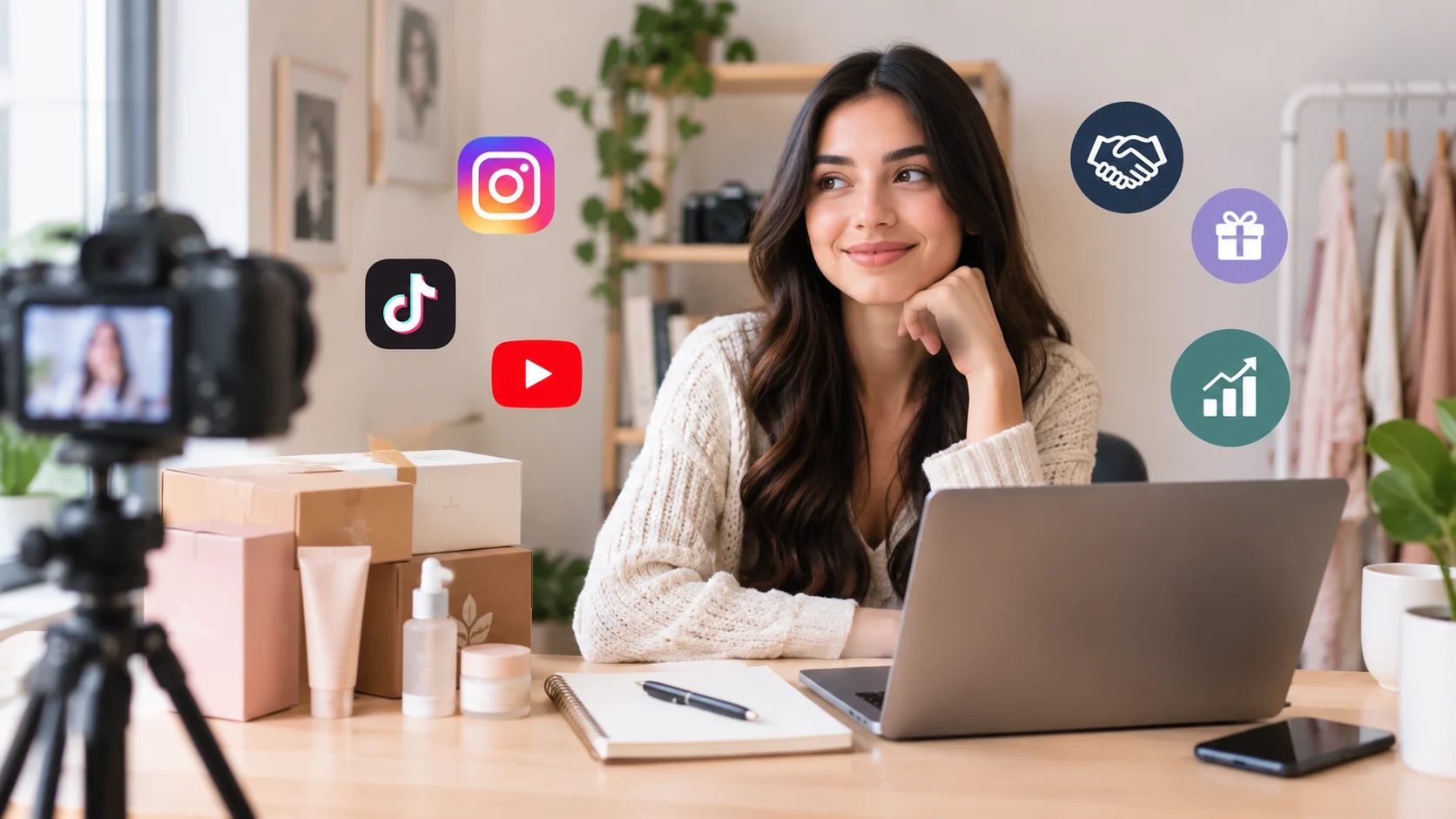
You can get sponsored as an influencer by building a clear niche, creating consistent content, pitching relevant brands with a strong media kit, and offering measurable value—even with a small but engaged following. If you're learning how to get sponsored as an influencer, focus on building a profile that gives brands a clear reason to work with you.
Quick Answer: You get sponsored as an influencer by defining a clear niche, building a simple media kit, pitching relevant brands directly, and proving your value through engagement — not just follower count. Even nano and micro creators land paid deals when they pair consistent content with confident outreach.
Key Takeaways:
- Engagement rate matters more than follower count when brands evaluate you
- A 1–2 page media kit makes you look professional and saves brands time
- Nano creators typically start at $50–$300 per sponsored post; rates scale with niche, content type, and usage rights
- Always disclose paid partnerships per FTC/ASCI guidelines
- Diversify beyond brand deals with subscriptions, tips, and digital products for stable income
This guide is for nano and micro influencers (1,000–100,000 followers) looking to land their first paid brand deal or PR package — whether you're just starting to pitch brands on Instagram/TikTok or ready to move from free gifting into paid partnerships.
Step 1: Build a Profile Brands Want to Work With
Before you start pitching, your profile needs to signal professionalism and clarity. Brands don't just look at follower count—they look at alignment, engagement, and how easy you are to work with.
Define Your Niche Clearly
"Lifestyle" is too broad. Brands want creators who speak directly to a specific audience. Examples:
● "Budget skincare for college students"
● "Home workouts for busy moms"
● "Affordable meal prep for fitness beginners"
● "Tech tools for remote workers"
A clear niche makes you easier to categorize and more valuable to the right brands.
Optimize Your Bio and Content
Your bio should answer three questions in seconds:
-
Who are you?
-
Who do you help?
-
What do you post about?
Example:
"Helping busy moms get fit at home | 20-min workouts | Realistic nutrition | DM for collabs."
Your content should:
● Be consistent in style and posting schedule
● Show real results (transformations, before/after, honest reviews)
● Include clear CTAs (save, share, comment, click link)
Brands scroll fast. If they can't understand your value in 5 seconds, they move on.
Focus on Engagement, Not Just Followers
Engagement rate (likes, comments, saves, shares relative to followers) often matters more than raw follower count. A creator with 10k followers and 10% engagement is more attractive than one with 100k and 1% engagement.
To boost engagement:
● Reply to comments and DMs consistently
● Ask questions in captions
● Use polls, Q&As, and interactive stickers in stories
● Go live regularly to deepen relationships
High engagement signals an active, trusting audience—exactly what brands want.
For more information about creator monetization and ways creators can build additional income streams, explore EarnOn's content monetization resources.
Step 2: Create a Simple but Strong Media Kit
A media kit is your influencer resume. It doesn't need to be fancy—just clear, honest, and easy to scan.
What to Include in Your Media Kit
Direct answer: A strong media kit includes your profile overview, audience details, content examples, services and rates, past collaborations, and contact information.
- Profile Overview
○ Your name, handle, and niche
○ Platforms you're active on (Instagram, YouTube, TikTok, blog, etc.)
- Audience Details
○ Follower count per platform
○ Average engagement rate (you can calculate this from insights)
○ Audience demographics (age, gender, location, interests)
- Content Examples
○ 3–5 screenshots of your best-performing posts
○ Brief captions explaining what each post achieved (e.g., "2.5k saves, 120 link clicks")
- Services and Rates
○ What you offer: reels, posts, stories, blogs, live sessions, etc.
○ Your starting rates (you can say "starting from $X" if you're flexible)
- Past Collaborations (If Any)
○ Brand names (with permission)
○ Type of content created
○ Results (e.g., "Generated 200 sign-ups using unique code")
- Contact Information
○ Email or DM link
○ Time zone and typical response time
Keep it to 1–2 pages max. Use a clean template (Canva has free ones) and export as PDF.
Why a Media Kit Matters
Direct answer: A media kit shows brands you're serious and professional, saving them time and helping you stand out even with a smaller following.
A media kit shows you're serious. It saves brands time and makes you look professional. Even if you're small, a well-structured kit can open doors that DMs alone won't.
Step 3: Find and Pitch the Right Brands
You don't need to wait for brands to find you. Proactive pitching is how many influencers land their first deals.
How to Identify Potential Brand Partners
Direct answer: Look for brands that already work with creators, align with your niche and values, and are small to mid-sized enough to be open to nano and micro influencers.
Look for brands that:
● Already work with creators (check their tagged posts and stories)
● Align with your niche and values
● Have products you genuinely use or would recommend
● Are small to mid-sized (they're often more open to working with nanos and micros)
Make a list of 20–30 brands you'd love to work with. Include:
● Brand name
● Contact email or DM handle
● Why you think you're a good fit
● A simple collab idea
Craft a Short, Personalized Pitch
Your pitch should be concise, friendly, and specific. Example:
Hi [Brand Name] team,
I'm [Your Name], a [your niche] creator with [Xk] engaged followers on Instagram. I've been using [Product] for [time] and love how it [specific benefit].
My audience is mostly [describe: e.g., "college students looking for affordable skincare"], which aligns well with your target customer.
I'd love to collaborate on a [reel + story] showing [specific idea: e.g., "my 7-day routine using your serum"]. I can drive awareness and real trials through my unique code.
Here's my media kit: [link]. Let me know if you're open to exploring this!
Best,
[Your Name]
Keep it under 150 words. Attach or link your media kit. Follow up once after 5–7 days if you don't hear back.
Use Influencer Outreach Platforms
Signing up for creator marketplaces can speed up the process. Platforms like Influencer.in, OneImpactor, or global marketplaces let brands search for creators by niche, follower range, and engagement. This puts you on their radar without cold pitching.
Step 4: Understand PR Packages vs Paid Partnerships
Not all collabs are the same. It's important to know the difference so you don't undervalue your work.
PR Packages (Gifting)
PR packages are free products sent by brands in hopes you'll post about them. They're common for:
● New product launches
● Testing new creators
● Building relationships before paid work
If you are wondering how to get PR packages, start by engaging with relevant brands organically, creating useful content around products, and sending short, personalized pitches explaining why you are a good fit.
PR packages are fine as a starting point, but don't work only for free forever. Use them to:
● Create content for your portfolio
● Build relationships with brands
● Negotiate paid work next time
Paid Partnerships
Paid partnerships involve a fee (plus sometimes free products). You're being paid for:
● Your time (creating, editing, posting)
● Your audience (access to their attention)
● Your influence (ability to drive actions like clicks or sales)
Never feel pressured to accept only gifting. If a brand wants dedicated content (reel, post, story sequence), that's paid work.
How to Transition from Gifting to Paid
Direct answer: Share your PR collab results with the brand, then offer a simple paid package for your next collaboration.
After a successful PR collab:
● Share results (saves, clicks, code uses) with the brand
● Mention you're now opening paid slots for the next quarter
● Offer a simple package ( reel + 2 stories + link in bio for $X)
This sets the expectation that your work has value.
Step 5: Set Your Rates Confidently
Pricing is one of the biggest pain points for influencers. Here's a simple framework.
Factors That Affect Your Rates
● Follower count and engagement: Higher engagement = higher rates
● Niche: Finance, tech, and B2B often pay more than lifestyle or fashion
● Content type: Reels and long-form videos cost more than static posts
● Usage rights: If the brand wants to reuse your content on their channels, charge extra
● Exclusivity: If they don't want you to work with competitors, charge a premium
Starting Rate Guidelines (Global/U.S. Markets)
These are rough ranges—adjust based on your niche and location:
● Nano (1k–10k): $50–$300 per post
● Micro (10k–100k): $300–$3,000 per post
● Macro (100k–1M): $3,000–$30,000+ per post
For stories, charge 30–50% of your post rate. For reels, charge 1.5–2x your post rate.
How to Present Your Rates
Direct answer: State your rates clearly and flexibly — for example, "Starting from $X per reel" — so brands know your floor while leaving room for custom packages.
In your media kit or pitch, you can say:
● "Starting from $X per reel"
● "Packages available: reel + 3 stories + link in bio from $Y"
● "Custom campaigns priced based on deliverables and usage"
This gives flexibility while setting a clear floor.
Step 6: Negotiate Like a Pro
Negotiation isn't about being aggressive—it's about being clear on your value.
Common Negotiation Scenarios
Brand offers too low:
Thanks so much for the offer! Based on my engagement and the deliverables (reel + 3 stories + link in bio), my rate for this campaign is $X. I'm happy to discuss a package that fits your budget.
Brand wants multiple posts:
For a multi-post package (3 reels + 6 stories over 4 weeks), I can offer a bundled rate of $X, which includes [specific deliverables and usage terms].
Brand wants exclusivity:
I can agree to exclusivity in the [niche] category for 30 days. My rate for exclusivity is an additional $X on top of the base campaign fee.
Always get agreements in writing (email is fine). Include:
● Deliverables (what, how many, when)
● Payment terms (amount, method, deadline)
● Usage rights (where, how long)
● Disclosure requirements (#ad, #sponsored)
Step 7: Disclose Sponsorships Properly
Transparency builds trust—with your audience and with regulators. For creators working with U.S. brands or audiences, the FTC Endorsement Guides explain how influencers should disclose material connections with brands.
Basic Disclosure Rules
● Use clear labels like #ad, #sponsored, or "Paid partnership with [Brand]"
● Place disclosures where they're hard to miss (beginning of caption, on-screen in videos)
● Don't hide disclosures in a block of hashtags
Platforms like Instagram have built-in "Paid partnership" tags—use them.
Why Disclosure Matters
Direct answer: Disclosure is legally required in many countries, builds audience trust, and protects both you and the brand from compliance issues.
● It's legally required in many countries (FTC in the U.S., ASCI in India, etc.)
● It builds trust with your audience ("I'm honest about what's paid")
● It protects you and the brand from compliance issues
When working with Indian brands or audiences, creators should also understand the ASCI Guidelines for Influencer Advertising in Digital Media.
When in doubt, over-disclose rather than under-disclose.
Step 8: Build Income Beyond Brand Deals
Relying only on sponsorships makes your income unstable. Smart creators build direct revenue streams that don't depend on brand budgets.
1) Set Up a Monetization Hub
Use a platform where fans can:
● Subscribe for exclusive content
● Tip you on posts and lives
● Buy PPV tutorials or guides
● Purchase digital products
This gives you a home base for income, separate from social platforms.
2) Create Simple Digital Products
Start small:
● A $6 checklist ("10-Step Skincare Routine for Oily Skin")
● A $12 mini-guide ("7-Day Home Workout Plan")
● A $24 template pack ("Content Calendar + Caption Templates")
Promote these in your bio, stories, and captions.
3) Launch a Low-Cost Subscription
Offer:
● Weekly exclusive posts
● Monthly live Q&A
● Early access to new content
Even 30–50 subscribers at $3–$6/month creates $90–$300 recurring.
4) Encourage Tips and Support
Add gentle CTAs like:
● "If this helped, you can support my work here."
● "Tips help me keep creating free content for you."
Many fans want to support but don't know how—make it easy.
5) Repurpose Content Across Formats
Turn one idea into multiple assets:
● A reel → a carousel → a short blog → a newsletter snippet
This saves time and gives you more to monetize.
Common Mistakes to Avoid
Creator Mistakes
● Charging too little or working only for free products
● Not tracking or sharing campaign results
● Relying only on sponsorships instead of building direct income
● Having no clear niche or audience definition
● Inconsistent posting, which hurts engagement and trust
Brand-Facing Mistakes
● Pitching irrelevant brands ("Hi fitness brand, I'm a food creator")
● Sending long, generic DMs with no clear offer
● Not following up after pitching
● Accepting vague agreements without written terms
Avoid these, and you'll stand out from most creators who stay stuck at "hobby" level.
FAQs: How to Get Sponsored as an Influencer
1. How do I actually get sponsored as an influencer?
Direct answer: Build a clear niche, pitch relevant brands with a strong media kit, and prove your value through engagement rather than follower count alone.
You get sponsored as an influencer by building a clear niche, creating consistent content, pitching relevant brands with a strong media kit, and offering measurable value—even with a small but engaged following. Focus on engagement, not just follower count, and show brands how you can drive real actions like clicks or sales. Start with small brands, deliver great results, and use those wins to land bigger deals.
2. How can I get PR packages from brands?
Direct answer: Engage with target brands organically, send short personalized pitches, and start with smaller or emerging brands that are more open to gifting.
You can get PR packages from brands by engaging with them organically, tagging them in relevant content, and sending short, personalized pitches explaining why you love their product. Build a simple media kit and share it when you reach out. Start with smaller or emerging brands that are more open to gifting. After successful PR collabs, share results and ask about paid opportunities next time.
3. How many followers do I need on Instagram to get paid?
Direct answer: There's no minimum — many brands pay nano and micro creators (1,000–100,000 followers) based on engagement and niche fit rather than follower count.
You do not need a specific follower count to get paid on Instagram. Many brands pay nano and micro creators with 1,000 to 100,000 followers if they have high engagement and a clear niche. Focus on building an active, trusting audience rather than chasing follower numbers. Show brands your engagement rate, audience demographics, and past results to prove your value beyond raw follower count.
4. How do I become a brand ambassador?
Direct answer: Start with one-off paid collabs, deliver strong results, then propose a longer-term ambassador partnership once you've built a track record with the brand.
You become a brand ambassador by consistently creating high-quality content around a brand's products, engaging with their team, and proving you can drive results. Start with one-off collabs, deliver excellent work, and share performance data. Then propose a longer-term partnership with clear deliverables and goals. Brands prefer ambassadors who already love their products and align with their values, so authenticity matters more than follower size.
5. What should I charge for brand deals on Instagram?
Direct answer: Nano creators typically charge $50–$300 per post, micros $300–$3,000, and macros $3,000–$30,000+, adjusted for niche, content type, and usage rights.
You should charge for brand deals Instagram campaigns based on your niche, engagement, content type, and usage rights, not just follower count. In global markets, nano creators often charge $50–$300 per post, micros $300–$3,000, and macros $3,000–$30,000+. Reels cost more than static posts, and stories cost less. Always clarify what's included—number of posts, stories, revisions, and usage permissions, before agreeing to a rate.
6. How do I pitch brands without sounding desperate?
Direct answer: Keep your pitch short, confident, and focused on the brand's benefit rather than your need for work.
You pitch brands without sounding desperate by keeping your message short, confident, and focused on their benefit. Explain why you love their product, how your audience aligns with theirs, and what specific idea you have for a collaboration. Attach your media kit and suggest a simple next step, like a quick call or email exchange. Confidence comes from knowing your value and presenting it clearly, not from begging for work.
7. Do I need a media kit to get sponsored?
Direct answer: Not strictly required, but a simple one-page media kit makes you look professional and improves your odds over creators who only send DMs.
You do not strictly need a media kit to get sponsored, but having one makes you look professional and saves brands time. A media kit summarizes your niche, audience, engagement, content examples, and rates in one document. It helps brands quickly decide if you're a good fit. Even a simple one-page kit can increase your chances of landing paid collaborations over creators who only send DMs.
8. How can I earn money beyond brand sponsorships?
Direct answer: Build direct income streams like subscriptions, tips, pay-per-view content, and digital products so you're not solely dependent on brand budgets.
You can earn money beyond brand sponsorships by building direct income streams like subscriptions, tips, pay-per-view content, and digital products. Offering exclusive guides, templates, or mini-courses lets you monetize your expertise directly. Hosting paid live sessions or coaching calls also works well for niches like fitness, finance, or education. This approach reduces reliance on unpredictable sponsorships and creates more stable, long-term income.
For additional creator monetization ideas, explore EarnOn's creator resources.
