Effective influencer outreach means researching creators who fit your niche, sending short personal messages, offering clear value, and following up once. Track replies, learn from what works, and build lasting relationships instead of one-off deals.
Why Most Influencer Outreach Gets Ignored
Open the inbox of a mid-sized creator on any Monday morning and you'll find the same thing: dozens of pitches that all sound alike. "Hi there, we love your content!" "We'd like to collaborate!" "Please find our media kit attached." Most get deleted in a few seconds, and the creator doesn't feel bad about it.
If your messages have been going unanswered, the problem is probably one of these:
- The message could have been sent to anyone. Nothing in it proves you looked at the creator's work.
- The ask is fuzzy. "Let's collaborate" tells them nothing about what you want, what you'll pay, or how much work it is.
- The fit is off. A vegan cooking creator will not answer a pitch for a steakhouse, however friendly it sounds.
- The offer is thin. Free product for a week of filming is a tough sell for someone who runs a business.
- The timing is careless. Sending a rushed request with a deadline three days away shows you haven't planned.
The encouraging part is that every one of these is fixable. Creators are not hard to reach; they are simply tired of being treated like a mailing list. When a message is clearly written for them, it stands out immediately.
The rest of this guide walks through the full process, from planning to the first reply and beyond, in the order you'd actually do it.
Put the Plan on Paper Before You Write a Word
It's tempting to open your email and start typing. Resist that for one hour. A little planning makes every later step easier.
Decide what you want from the partnership
Be specific. "Exposure" is not a goal. These are:
- 200 sign-ups for a free trial
- 100 sales of the new summer flavor
- 15 short videos you can reuse in ads
- 5,000 visits to a launch page
Your goal decides who you contact and what you ask them to do. A creator who is great at funny short videos might be perfect for reach but terrible for detailed product reviews. Match the person to the job.
Describe the people you want to reach
Write two or three lines about your ideal customer: age range, interests, what they read or watch, what problem they want solved. Then look at your website analytics, past orders, and customer emails to check your guess. Real data almost always surprises you a little.
Choose what you can offer
Creators want to know what's in it for them. Decide early which of these you can give:
| Offer type | What it looks like | Best for |
|---|---|---|
| Free product | You send items, they share honest thoughts | Small creators, low-cost products |
| Flat fee | A set payment per post or video | Clear deliverables, predictable costs |
| Commission | A share of each sale through their link | Products with strong appeal |
| Mixed deal | Fee plus commission plus product | Long-term partners |
| Long-term role | Monthly retainer for regular posts | Brand ambassadors |
Most creators with a steady audience expect payment. Free product alone works best with newer, smaller accounts who are excited about your category. If you can't pay, be honest about it and make up for it with something else, like early access, a personal thank-you, or a generous commission.
Set your timeline and limits
Pick a launch date and count backward. You need time to find people, write to them, wait for replies, agree on terms, ship products, and let the creator make something good. Six to eight weeks is a comfortable window for a first round.
Where to Find Creators Who Truly Fit
Good outreach depends on good targets. Spend real time here, because a perfect message sent to the wrong person is still wasted.
Start with people who already know you
Look through your own followers, reviews, and tagged photos. A customer who already loves your product and has a small but engaged audience is often your best first call. They already speak your language, and they'll probably say yes.
Use tools to save hours
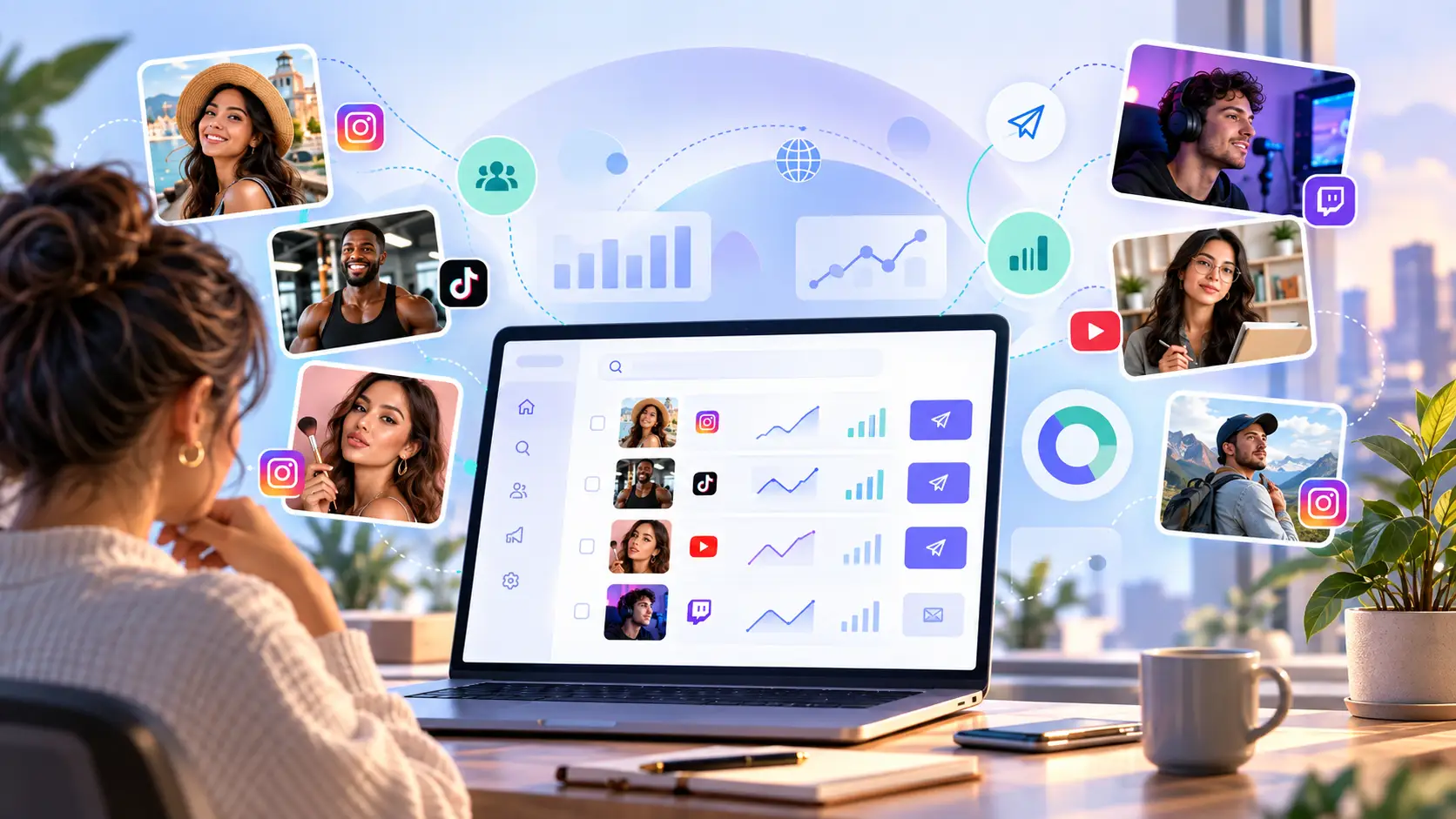
Once you know your niche and location, software can speed things up a lot. Many teams use a searchable influencer database to filter creators by country, topic, audience size, and engagement rate, instead of scrolling profiles one by one. Good tools also show where followers live and how old they are, which matters when you only sell in certain places.
Modern influencer discovery tools go a step further by suggesting people similar to those you already like, and by showing past brand deals so you can see who they've worked with. Several influencer platforms bundle these features with messaging and payment, so your notes and contracts stay in one place. Try a free plan or trial before paying, and only upgrade once you know you'll use it every week.
A word of caution: treat any tool's list as a first draft. Software can show you numbers, but it can't tell you whether a person's voice suits your brand.
Search by hand to catch what tools miss
Tools favor creators who are already well documented. Some of the best partners haven't been listed anywhere, and you will only spot them by looking yourself:
- Search the words your customers actually use, including product names and everyday problems.
- Read the comments under big posts in your niche, where smaller creators often leave thoughtful replies.
- Check who your competitors tag or repost.
- Browse hashtags and community threads, and note names that come up more than once.
Keep a simple spreadsheet with name, platform, link, follower count, topic, and a note about why you like them.
Check every name before it goes on your list
A few minutes of checking can save you from a costly mistake. Look at:
- Comment quality. Are people asking real questions and sharing opinions, or leaving the same three emojis?
- Follower growth. Steady growth is healthy. Sudden jumps can point to bought followers.
- Audience match. Ask for a screenshot of their audience location and age. It's a normal request.
- Past sponsored posts. Do they feel natural, or do they read like scripts? If nearly every post is an ad, the audience may be tired.
- Values and tone. Scroll back a few months. Would you be happy to see your logo beside that content?
Turn a Long List Into a Short, Ranked One
Nobody can write thirty thoughtful messages in an afternoon. Cut your list to about ten people, then rank them so your best-fit creators get your best effort.
A simple scorecard helps. Give each creator a score from 1 to 5 in each category, then add them up:
| Category | What you're judging |
|---|---|
| Topic fit | Do they talk about your kind of product? |
| Audience fit | Do their followers look like your customers? |
| Engagement | Are people reacting in a real way? |
| Content quality | Are their photos or videos well made? |
| Brand safety | Does their tone match your values? |
Contact your top three or four first. Hold the rest as backups, so you can fill gaps quickly if someone declines or is fully booked.
Write Messages Creators Actually Answer
This is the heart of the process. A good message is short, personal, and easy to say yes or no to.
The four parts of a strong first message
- A real detail. Mention something specific from their recent work, such as a video, a tip, or a result you tried yourself.
- Who you are. One sentence about you and your brand.
- The idea. What you'd like to do together, in plain words.
- One easy question. Ask if they're open to a quick chat, not for a big commitment.
A sample you can adapt
Subject: Your carry-on packing video (and an idea)
Hi Priya, I tried the rolling trick from your two-week packing video on my last trip, and it honestly saved me a checked bag. I'm Jon from Trailmark, where we make lightweight travel pouches. I think your followers would enjoy them, and I'd love to talk about a paid collaboration. Would you be open to a quick chat this week? Happy to send details first if you prefer.
Notice what it does. It's about 80 words. It gives a genuine compliment, says exactly who is writing, and mentions payment up front so nobody wastes time.
Subject lines that get opened
Subject lines decide whether anyone reads the rest. These work better than "Collaboration opportunity":
- "Loved your [specific video or post]"
- "Quick idea for your [topic] audience"
- "Paid partnership, [brand] x [creator name]"
- "Question about your [recent project]"
Keep them under eight words, avoid all caps, and never use tricks like "Re:" when there's no earlier conversation.
Where to send it
Email is usually best. Many creators list a business address in their bio, and it lets you attach details later. If none is available, a direct message is fine, but keep it even shorter. If you're using a tool, follow its messaging rules too.
The follow-up
Silence is common and rarely personal. Wait four or five days, then send one friendly nudge:
Hi Priya, just floating this back to the top in case it got buried. No pressure at all, and thanks for reading either way!
If there's still no answer, move on. Sending a third or fourth reminder can leave a bad impression that lasts.
When they say yes
Reply quickly, ideally the same day. Confirm the details in writing: what you'll pay or send, what the creator will make, deadlines, how long you can reuse the content, and how the post will be labeled as sponsored. A short written agreement protects both sides. Ask about their process too, because some creators have preferred lead times or strict rules about brand mentions.
When they say no
Say thank you and mean it. Ask if you can reach out again for a future project. Creators remember polite brands, and plenty of "nos" turn into "yes, next time."
Negotiate Deals That Feel Fair
Rates can be awkward to talk about, but avoiding the topic causes more trouble. Here are some habits that keep things smooth:
- Ask for their rate card first. Many creators have one. If they don't, share your budget range honestly.
- Pay for what matters. Extra rights, like using a video in your ads, usually cost more than a single post.
- Be flexible. A creator might prefer a package of three posts at a lower rate over one big post.
- Never haggle down to embarrassment. A fair price gets you better work and a happier partner.
- Pay on time. Late payments are one of the top reasons creators avoid brands.
Track Results So Each Round Improves
A message plan is only as good as the numbers behind it. Set up simple tracking before anything goes live.
What to measure in the outreach itself
- Reply rate: replies divided by messages sent
- Positive reply rate: replies that show interest
- Time to reply: how quickly people answer
- Deals closed: how many conversations become signed partnerships
If your reply rate is under 10%, revisit your list and your wording. If people reply but say no, the offer may need work.
What to measure in the partnership
Give each creator a unique link and discount code, then record clicks, sign-ups, sales, and cost in one shared sheet. This is the same discipline that makes influencer marketing campaigns easier to judge and improve, because you can compare creators side by side instead of guessing. Review it every few days during the run, not only when it ends.
Learn and adjust
After each round, note three things: what worked, what didn't, and what you'll change. Perhaps subject lines with a specific compliment doubled your replies. Perhaps mid-sized creators cost too much for the sales they brought. Write it down. Small lessons add up quickly.
Mistakes That Quietly Kill Your Reply Rate
- Mass emailing. Copy-and-paste messages are obvious and easy to ignore.
- Long walls of text. If your message needs scrolling, most people will stop reading.
- Hiding the budget. Vagueness about money wastes everyone's time.
- Overcontrolling the content. Give a clear brief, then let the creator tell the story their way.
- Skipping the research. One wrong detail, like the wrong name or an old video, ruins the whole message.
- Disappearing after the post. Say thanks, share results, and stay in touch.
Quick Checklist Before You Hit Send
- A goal with a number attached
- A clear description of your ideal customer
- An offer you can actually deliver
- A ranked shortlist of about ten creators
- A personal, short first message for each
- A follow-up ready for day four or five
- A simple agreement and tracking links prepared
- A date set to review results
